
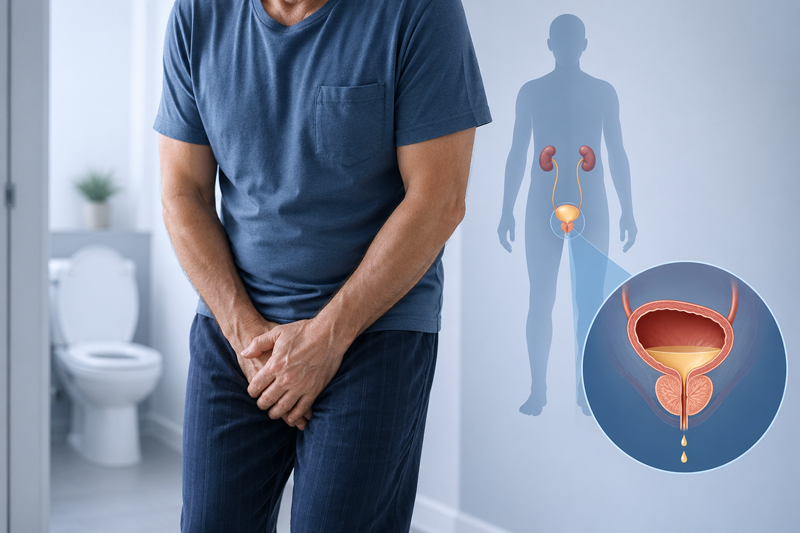
Urinary incontinence in men is the involuntary leakage of urine, which can range from occasional dribbling to complete loss of bladder control. While more common in women, urinary incontinence affects millions of men and can significantly impact daily life and self-confidence.
There are different types of incontinence in men, including stress incontinence, urge incontinence, overflow incontinence, and functional incontinence. Common causes include prostate problems, neurological conditions, and weakened bladder muscles.
At Unio Specialty Care Urology, we offer compassionate care and tailored treatment options to help you regain control and improve your quality of life. If you are struggling with urinary leakage, talk to your doctor about your symptoms and treatment options.
Causes of Urinary Incontinence in men
- Prostate enlargement (benign prostatic hyperplasia)
- Prostate surgery (prostatectomy) or radiation therapy for prostate cancer
- Neurological conditions such as Parkinson’s disease, stroke, multiple sclerosis, or spinal cord injury
- Bladder muscle overactivity (overactive bladder)
- Chronic constipation
- Obesity, smoking, and chronic coughing
- Certain medications that relax bladder muscles
Diagnosing Urinary Incontinence in men
- Urinalysis and urine culture to check for infection or blood
- Post-void residual test to see how much urine remains in your bladder after urination
- Bladder diary to track urination patterns
- Urodynamic testing to evaluate bladder function
- Cystoscopy to look at the bladder and urethra
Treating Urinary Incontinence in men
Treatment for urinary incontinence in men depends on the type, cause, and severity of the condition.
Options include:
- Behavioral strategies: Bladder training, scheduled voiding, and fluid management
- Pelvic floor exercises: Strengthening the pelvic muscles with Kegel exercises can improve bladder control
- Medications: To relax the bladder muscles or shrink the prostate
- Medical devices: Urethral inserts or external catheters
- Surgery: In severe cases, procedures such as urethral slings, artificial urinary sphincters, or prostate surgery may be recommended
Your doctor will discuss the most appropriate options to help you manage your symptoms effectively.
Urinary Incontinence in men - FAQs
The most common types are stress incontinence, urge incontinence, overflow incontinence, and functional incontinence.