Table of Contents
Introduction
Did you know? Head and neck cancer accounts for 4% of all cancers in the United States, and is diagnosed in about 66,000 people annually. Radiation therapy plays a central role in treatment for many of these patients. However, traditional radiation can affect nearby healthy structures, such as salivary glands and swallowing muscles, leading to side effects that impact quality of life. Studies show that up to 70–80% of patients receiving conventional radiation may experience significant dry mouth during or after treatment.
SBRT (Stereotactic Body Radiation Therapy) is designed to address this challenge. By using very precise, image-guided radiation, SBRT reduces the risk of harming nearby healthy tissue while effectively targeting the tumor. Advanced systems such as CyberKnife® enable radiation oncologists to tailor treatment with exceptional accuracy, as highlighted in Unio Specialty Care’s resource on focal SBRT.
In this article, we will review how SBRT works in head and neck cancers, explain how precision targeting reduces side effects, and explore why advanced radiation techniques are reshaping modern cancer care.
What Is SBRT and How Does It Work?
After learning about the side effects of traditional radiation, many patients ask the same question: Is there a safer, more precise option? That’s where SBRT (Stereotactic Body Radiation Therapy) comes in.
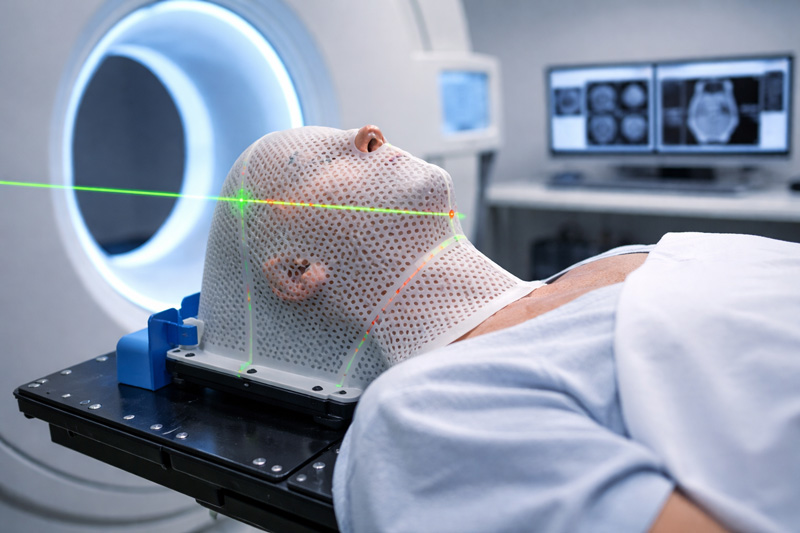
SBRT delivers high-dose radiation directly to the tumor, usually in five or fewer sessions instead of several weeks of daily treatment. Using advanced imaging and real-time tracking, radiation beams are carefully shaped and directed from multiple angles, helping protect nearby healthy tissues like the salivary glands and swallowing muscles.
Systems like the CyberKnife®, featured in Unio Specialty Care’s overview of focal SBRT, use robotic guidance to adjust for even the smallest patient movement, ensuring extremely precise delivery. By combining advanced imaging with pinpoint targeting, SBRT is designed to control tumors effectively while reducing the risk of side effects.
Why Is Minimizing Side Effects So Important in Head and Neck Cancer Treatment?
Head and neck tumors sit millimeters away from structures responsible for speech, swallowing, taste, and saliva production. That means even slight radiation exposure to healthy tissue can lead to long-term functional complications.
Research shows that 30–50% of patients may experience long-term swallowing dysfunction following conventional chemoradiation, and many report persistent changes in taste and nutrition. The National Cancer Institute also notes that radiation-related side effects in this region can significantly affect quality of life due to the density of critical anatomical structures.
Because these cancers impact essential daily functions, minimizing side effects is not simply about comfort; it’s about preserving speech, nutrition, independence, and long-term well-being. This is where highly targeted approaches like SBRT become especially valuable.
How Does SBRT Reduce Damage to Healthy Tissue?
The key advantage of SBRT is precision. In head and neck cancers, where tumors lie close to salivary glands, the spinal cord, and swallowing muscles, even small reductions in radiation exposure can significantly impact long-term function.
SBRT uses advanced imaging, real-time tumor tracking, and highly conformal dose planning to tightly shape radiation around the tumor. Clinical studies have shown that stereotactic radiation techniques can reduce radiation dose to surrounding structures by 20–40% compared to conventional radiation approaches. In head and neck cancers, SBRT has shown local control rates of 70–90% at one year, with fewer cases of severe toxicity than traditional re-irradiation methods.
What Side Effects Are Common With Traditional Radiation Therapy?
Traditional radiation therapy is effective, but in head and neck cancers it can affect nearby structures that control speech, swallowing, and saliva, leading to side effects that impact everyday life. Clinical studies report:
- Dry mouth: Affects up to 80% of patients during treatment; many experience long-term symptoms.
- Swallowing difficulty: Occurs in approximately 30–50% of patients after chemoradiation.
- Oral mucositis: Painful mouth inflammation develops in up to 70–90% of patients receiving combined radiation and chemotherapy.
- Fatigue: One of the most common systemic effects during radiation courses lasting 6–7 weeks.
- Taste changes: Over 90% of head and neck cancer patients undergoing radiotherapy experience moderate to severe taste disturbances in the acute phase.
These side effects are not just temporary inconveniences; they can affect nutrition, communication, and long-term quality of life. This is why precision-focused approaches like SBRT are gaining attention in modern head and neck cancer care.
Does SBRT Shorten Treatment Time Compared to Conventional Radiation?
Traditional radiation for head and neck cancer is typically delivered over 6–7 weeks, with daily sessions. SBRT, on the other hand, usually needs 1 to 5 treatment sessions, depending on the case. Research on stereotactic radiation methods indicates that this approach, which uses fewer but stronger doses, can cut the total treatment time by 70–80% while still effectively controlling the cancer in certain cases.
Shorter treatment courses may also reduce cumulative exposure to surrounding tissues and minimize disruption to a patient’s daily life.
Who Is a Good Candidate for SBRT in Head and Neck Cancer?
Not every head and neck cancer case is treated the same. Careful patient selection is essential to ensure SBRT delivers both safety and effective tumor control.
Patients who may be good candidates include:
- Those with small, well-defined tumors where precise targeting is feasible
- Patients with recurrent disease who have previously received radiation
- Individuals who are not ideal surgical candidates due to medical comorbidities
- Patients seeking shorter treatment courses because of work, travel, or overall health
- Cases where sparing nearby critical structures is especially important (e.g., salivary glands, spinal cord)
Final candidacy depends on tumor size, location, prior treatments, and overall health status. A multidisciplinary evaluation ensures SBRT is used appropriately, maximizing precision while protecting long-term function.
How Does SBRT Support Long-Term Quality of Life?
SBRT is designed not just to control tumors but to help patients maintain long-term function. SBRT supports quality of life by
- Reducing salivary gland exposure, lowering chronic dry mouth risk
- Protecting swallowing muscles, decreasing long-term dysphagia
- Preserving taste and oral tissues, supporting nutrition
- Shortening treatment time, minimizing fatigue and disruption
- Limiting cumulative toxicity, especially after prior radiation
By combining precision targeting with fewer treatment sessions, SBRT aims to maintain strong tumor control while helping patients preserve the daily functions that matter most.
How Can Unio Specialty Care Support Patients Through SBRT Treatment?
Head and neck cancers require precision, not only to control the tumor but also to protect speech, swallowing, and long-term quality of life. As discussed, SBRT delivers highly focused radiation in fewer sessions, helping minimize unnecessary exposure to healthy tissue while maintaining strong treatment outcomes.
At Unio Specialty Care, patients benefit from advanced image-guided radiation technology, individualized treatment planning, and a multidisciplinary team focused on both effectiveness and quality of life. Unlike conventional radiation centers that rely solely on standard fractionation schedules, Unio integrates precision-driven approaches such as CyberKnife® SBRT to tailor therapy to each patient’s anatomy and clinical needs.
To schedule a consultation and discuss whether SBRT is right for you, call Unio Specialty Care today. Early evaluation can make a meaningful difference in both treatment outcomes and long-term well-being.

- By: Unio Specialty Care, Published: 3/24/26
- Medically Reviewed By: Tahir Ijaz, MD, FRCP, FACRO – 3/23/26